Winnipeg Police Crimestat Maps Offer a Distorted View of Crime

There is a problem with the crime maps displayed on the Winnipeg Police Crimestat site.

If  you go on the site and draw up the map for District 1 (the downtown division) you get the following disclaimer:

Your filter selection returned 2060 incidents.  You are viewing the first 1000 crime incidents on your map window. Click on ‘view report ‘for complete crime incident details or refine your filter criteria further.

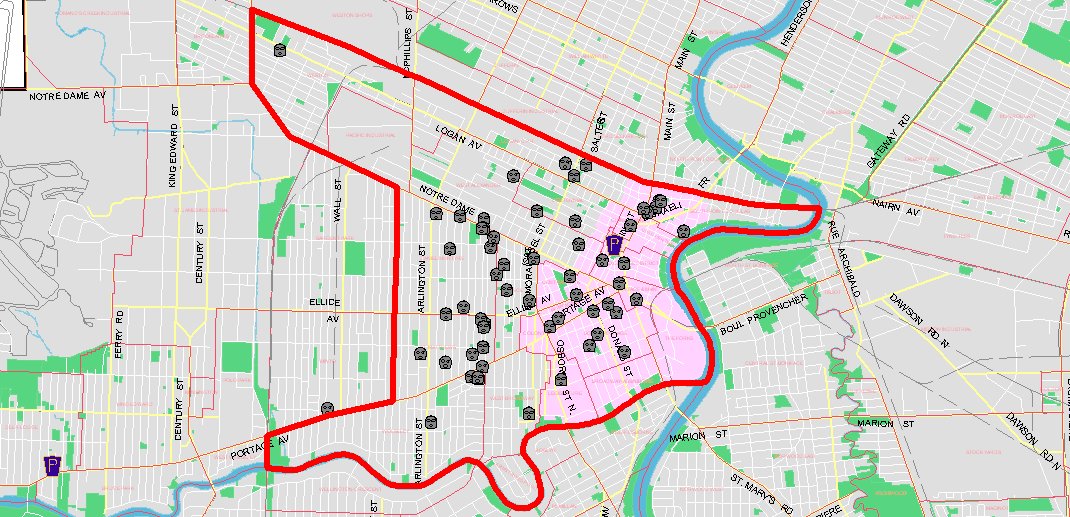
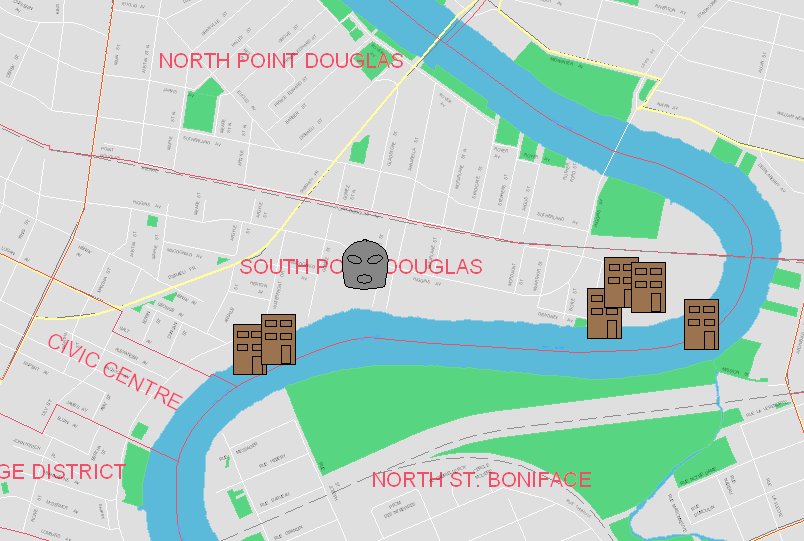
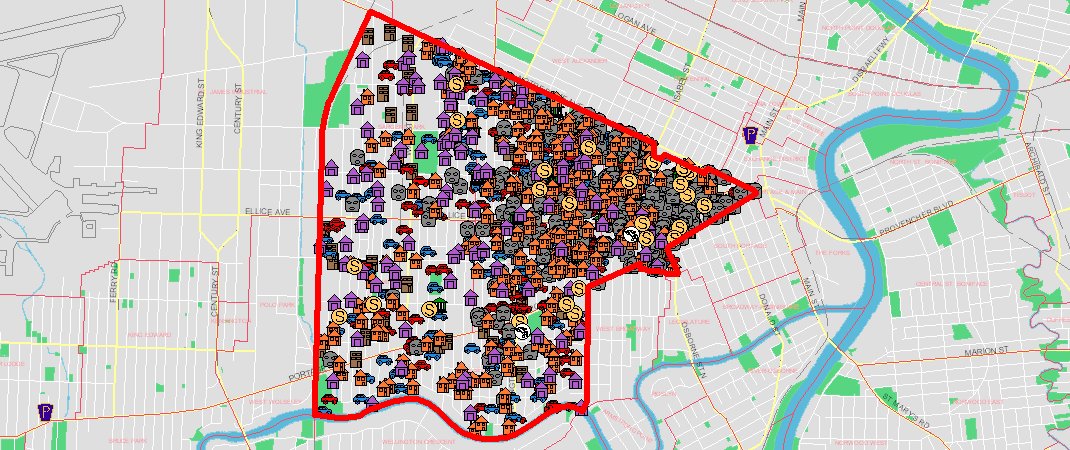
The Crimestat map for District 1, the downtown area for the period of January 1st  to November 25th 2011, displays only the first 1000 incidents reported in 2011 (Map 1).    Because the first 1000 incidents took place between January 1st  and June 24th 2011, a search for those dates will display the same map, the same 1000 incidents.

Map 1

Source: Winnipeg Police Crimestat (Retrieved on 11 11 27)

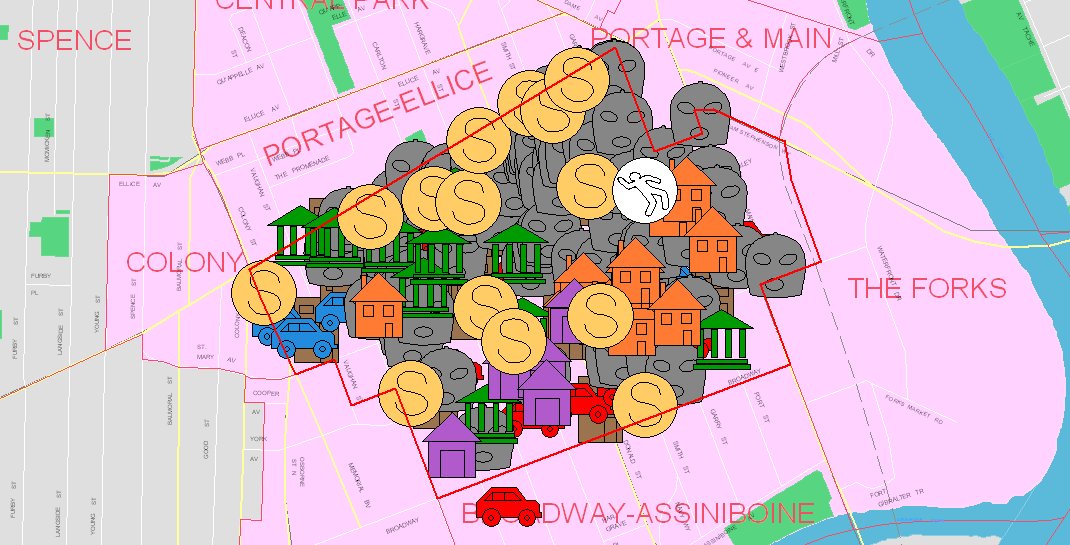
If you want to see a map that depicts the  crimes committed between June 25th and November 25th 2011, you will need to draw up a separate map. It will show the additional 1038 crimes not shown on the first map.  Map 2 displays those incidents.  Although the maps appear virtually identical, i.e. the crime pattern as largely unchanged,  subtle differences can be noted.

Map 2

Source: Winnipeg Police Crimestat (retrieved on 11 11 27)

In order to get a true view of crime in the downtown area you would need to be able to combine those two maps but the system does not allow that.

The same limitation applies when you request a map for any geographical area that has more than 1000 reported incidents.  When you draw up the city-wide map (8509 incidents reported between January 1st and November 25th 2011) the map only displays the first 1000 incidents.

Imagine what the maps would look like if you could see all incidents of reported crime!

Weekend Crime in the Daniel McIntyre Ward not Spillover

The City of Winnipeg is divided into 15 Electoral Wards – each represented by a city councillor.

Councillor Harvey Smith who represents the Daniel McIntyre Ward is quoted in today’s Free Press as saying the crime wave in Winnipeg this weekend spilled over into his constituency.  The Daniel McIntyre Ward which is situated within the boundaries of Police District 1 (the downtown district) is one of the smallest wards geographically but is surpassed only by the Mynarski Ward in terms of the numbers of crimes tracked by Crimestat.

The following table breaks down reported crime by electoral ward for the period from January 1st 2010 to October 29th  2011.

Ward Councillor Jan 1-Oct 29 2011 Jan 1 –Oct 29 2010 % change
Mynarski Ross Eadie 1162 1538 -24
Daniel McIntyre Harvey Smith 1137 1141 0
Point Douglas Mike Pagtakhan 951 1139 -17
Fort Rouge-Fort Garry Jenny Gerbasi 759 876 -13
St. James-Brooklands Scott Fielding 605 779 -22
Elmwood-East Kildonan Thomas Steen 597 876 -13
River Heights-Fort  Garry John  Orlikow 444 599 -26
St. Boniface Daniel Vandal 406 533 -22
St. Vital Vacant 316 537 -37
Old Kildonan Devi Sharma 269 443 -39
Transcona Russ Wyatt 256 249 +3
St. Charles Grant Nordman 249 244 +2
North Kildonan Jeff Browaty 243 368 -34
St. Norbert Justin Swandel 237 377 -37
Charleswood-Tuxedo Paula Havixbeck 167 207 -19

(source:  Winnipeg Police Crimestat)

The Daniel McIntyre Ward is one of only three wards that has not seen crime go down so far this year. One could argue that crime is not spilling into the Daniel McIntyre ward from adjoining wards but rather that crime is spilling out into adjacent wards.

Below is a crime map which depicts crimes in Daniel McIntyre Ward between Jan 1st. 2011 and Oct 29th 2011.

News flash for Councillor Smith:  What happened in Daniel McIntyre Ward this past weekend cannot be explained away as ‘spillover’.  To do so is to turn a blind eye to the realities of the crime problem that has existed in the Daniel McIntyre ward for some time now.  Nothing new here, Councillor Smith.

Crimes Committed vs Crimes Reported

The Winnipeg Police Service tracks 10 specific criminal offenses on Crimestat.

During the month of September, 2011,  Crimestat reported that  for those 10 specific crimes,  787 offences were committed, city-wide.

In  September 2011 the Winnipeg Police Service issued 26 News Releases.  In those 26 news releases, however, the Service made reference to only 10 of the 787 offences reported on Crimestat during September.

The table below shows the disparity between offences committed and offences reported on:

Crime Type Offences committed Offences  reported
Commercial Break-In 65 0
Break-In (other) 157 0
Residential Break-In 211 0
Homicide 3 3
Commercial Rrobbery 43 3
Non-Commercial Robbery 111 1
Sexual  Assault 16 1
Shooting 3 3
Auto Theft 109 0
Attempted Auto Theft 69 0
Total 787 10

It is of interest to note that the September 27th release makes reference to an arrest of a suspect  for 6 commercial robberies committed on September 16th and 17th.  Information that this robbery spree was in progress might have been of interest to merchants in the  area on the  dates when it was taking place.

This brings to mind Brian Kelcey’s recent op-ed in the Winnipeg Free Press in which he makes reference to running the City of Winnipeg on “spin”.

I suppose if the Police Service were to provide more information on muggings and sexual assaults it would become evident that the majority of those offences occurred in the downtown and the immediate north end of the city.  That would not be good for the image of the downtown which is being “spun” as safe.  During the month of September,  59 of the 111 muggings  reported city-wide were committed in District 1, which encompasses the downtown area.  The Crimestat map below shows what it looks like when these 59 offences are mapped:

Not a pretty picture and pretty difficult to spin.

When it comes to spin, George Orwell perhaps said it best, “He who controls the present controls the past, he who controls the past controls the future”.

Unpuzzling the Mayor About Downtown Safety

Air Canada recently put out a directive to staff instructing them to no longer stay in downtown Winnipeg hotels citing safety concerns.  According to media reports, our Mayor is puzzled by this move.

The Mayor,  other politicians and special interest groups with a  vested interest in the downtown, have for years been perpetuating the illusion that the downtown area of Winnipeg is a safe place.

I suppose Air Canada’s refusal to ignore the facts is what is puzzling the Mayor.

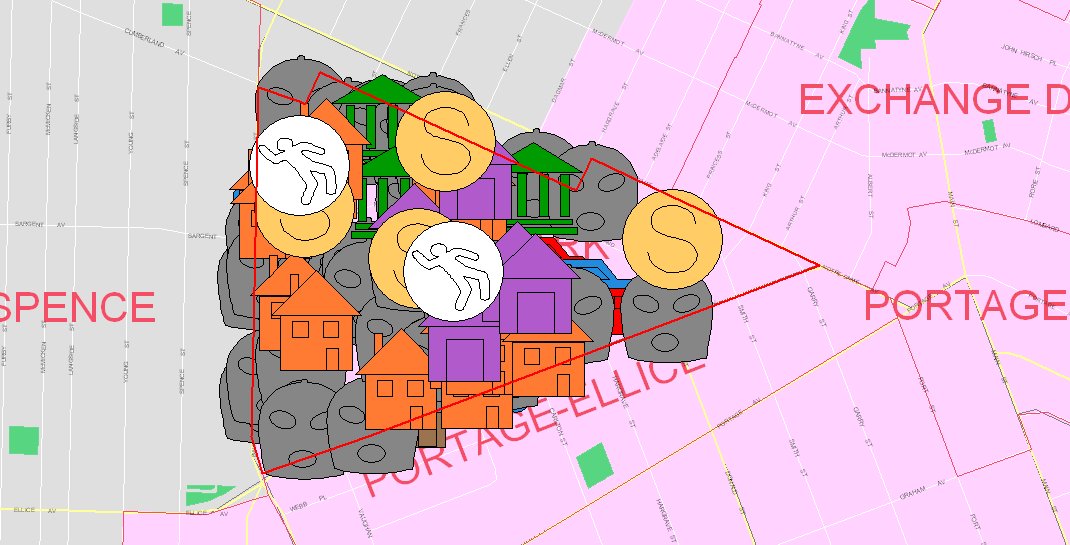
The Crimestat Maps that follow depict the 8 types of crime tracked by Crimestat for the period for October 1st 2010 and October 1st 2011.  Map 1 shows the Portage South Community, Map 2 the Central Park Community, and Map 3 the Portage Ellice Community.  The maps (and statistic tables) for those 3 downtown communities show that in the previous calendar year there were 4 homicides,  111  muggings,  and 24 *  sexual assaults.

Map 1

                                                               South Portage Community

Map 2

                                                               Central Park Community

Map 3

Portage Ellice Community

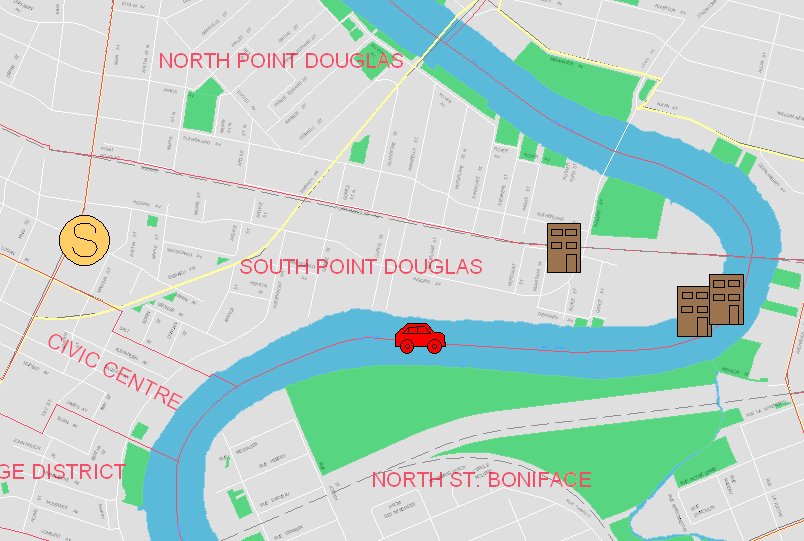
Now let’s have a look at the St. James Industrial Community, where the Ar Canada staff will be staying.  This area  had no homicides in the last year, 6 muggings and 6 sexual assaults and a smattering of other property crime.

Map 4

                                                              St. James Industrial Community

If you are still puzzled Mr. Mayor why not go for a walk with the Chief of Police to Portage Avenue and Main Street, pull your collective heads out of the clouds and look what is happening on Portage Avenue.  Alternately have a close look at Crimestat and ‘visit’ some of the neighbourhoods in the downtown and the immediate north end and ask yourself how safe you would feel to live there.  And finally, do something about it.

Stop spewing the election time propaganda that policing and the safety of Winnipeg streets is a provincial problem.  It’s not.  It’s a City of Winnipeg problem.  It’s your problem and a Winnipeg Police problem.  Do your job and provide appropriate policy direction to the Police Service and hold them accountable to address the issue of crime on the streets of Winnipeg.

*  correction to original post

Taking Care of Business in the North End: Again

While the  crime rate (for the crimes types reported on Crimestat) in north Winnipeg (police District 3) is basically static a study of specific north end neighbourhoods shows a much different picture.  Crime in neighbourhoods in close proximity to William Whyte is showing a disturbing trend.  The crime rate in these high crime neighbourhoods is rising, in some case dramatically.

The recent multiple shootings in the north end have again focused attention on this part of the city.  It is unfortunate that the only time these high crime neighbourhoods get attention is in times of tragedy.

The map below depicts the crimes tracked on Crimestat for the south-east portion of District 3.

Source:  Winnipeg Police Crimestat

The crime rate in these neighbourhoods is such that the icons depicting the various crimes overlap each other and it is difficult to appreciate the severity of the problem.  For the sake of clarity one needs to eliminate some of the crime types.  The image below illustrates the violent crimes (murder, shootings, robberies and sexual assault) for the area in question.

Source:  Winnipeg Police Crimestat

A further examination of the crime trend in seven specific north end neighbourhoods shows the following increases:

Neighbourhood 2010 Year to Date October 2009 toOctober 2010
William Whyte 1% 5%
Dufferin 11% 18%
Burrows Central 15% 13%
Robertson 25% 25%
Inkster-Farady 38% 30%
St. John’s 23% 26%
Luxton 16% 32%

Source:  Winnipeg Police Crimestat

The important issue with these data is not so much the actual increase but rather the trend they represent.  Increased crime in high crime neighbourhood or a cluster of neighbourhoods clearly demonstrates the area is not-self sustaining and needs help.  The approach currently employed in these neighbourhoods is not working

The north end communities clustered around the William Whyte have received sporadic attention over the past couple of years usually related to tragedies such as shootings and homicides.  When tragedies occur everyone (the police, the mayor and other civic and provincial politicians and the media) expresses outrage and vows are made to leave no stone unturned to bring the killer(s) to justice.  As indicated in a previous post the police flood the area with additional personnel and the hunt is on.

Such a sudden influx of police resources is in and of itself not a bad strategy, in the short-term.  It becomes problematic when it is the only strategy.  Flooding high crime neighbourhoods with additional police resources drawn from other areas (operational and geographic) is not a sustainable strategy nor is it a strategy that addresses the long-term needs of the neighbourhood and its residents.

Earlier this year police resources were shifted from the north end (and other parts of the city) to the west end to deal with shootings there.  Now resources are being shifted away from the west end back to the north end.  This endless cycle of shifting  resources to deal with emergency situations that crop up is symptomatic of a poorly planned (or unplanned ad hoc and reactive) approach to dealing with crime in high crime neighbourhoods.

The secondary flaw in the constant shifting of resources strategy is its reliance on using a strict law enforcement approach to address a much broader social issue.  You may be able to apply a strict law enforcement approach and arrest you way out of a purely law enforcement issue but you cannot arrest your way out of a social issue.

The problem is that many tradition bound police executives are tethered to the strict law enforcement approach.  They are not adequately familiar with cutting edge approaches to neighbourhood redevelopment and neighbourhood capacity building. Many don’t see that as a policing function.  It may not be a policing function in the strict sense of the word, but what neighbourhood capacity building does is it empowers people and helps prevent crime.  Based on the policing principles laid down by Sir Robert Peel (which in my view are still very applicable today) the prime mandate of the police is crime prevention.

The important issue is not how you strengthen neighbourhoods and reduce and prevent crime but rather that you do it. For high crime neighbourhoods in Winnipeg if that means the police need to go down ‘the road less travelled’, then let the journey begin.

The nature of the issue (problem) must dictate the approach.  As well the nature of the issue must determine the timeline.  Complicated social issues cannot be resolved using simplistic short-term strategies and tactics.

The question is this:  is the Winnipeg Police Service willing to make the leap from using a traditional short-term reactive law enforcement approach to dealing with issues in high crime neighbourhoods to using a long-term proactive approach?

The Service certainly has the tools, the personnel and the budget to make it happen.  The question is: do they have the will?

The Sam’s Plan and a Few Things The Sam Did Not Mention

Fighting Crime The Sam’s Way

In his full-page ad in the October 16th issue of the Winnipeg Free Press, the self-proclaimed “Tough on Crime”  Sam outlined his accomplishments during his six-year tenure as Winnipeg’s Mayor.  At least two (and perhaps more) of Sam’s accomplishments were not mentioned.

The first: Closed Circuit Television in the downtown area.  The Sam fails to mention this $450,000.00 vanity project.  Why not?  Normally when cities institute this type of program they flood the media with details about arrests that resulted from the project.  They outline how the initiative has reduced crime and made the area safer.  We have heard none of that which leads one to conclude that perhaps it has not had the positive impact it was meant to have in terms of preventing crime. Perhaps if you had just spent close to half a million dollars (enough money to put 5 police officers on Winnipeg streets for a year) on a failed project you would not mention it either.

The second accomplishment which has turned into an ‘unmentionable’ is truly puzzling as it was indeed a bona fide accomplishment.  The introduction of Crimestat in 2007 held great promise in terms of identifying crime trends and hot spots and more importantly, directing and guiding police action.  Crimestat is a tool that has proven successful in reducing crime in virtually every North American jurisdiction it has been used and yet seems to have lost favour within the Winnipeg Police Service.  As mentioned in a previous post on this topic, the Executive of the Winnipeg Police Service has turned its back on the one tool with a proven track record of producing results when it comes to crime reduction.  Is The Sam turning his back on it?  What other explanation for avoiding mention of it when he originally introduced it with such fanfare?

The really sad thing is that Crimestat, if used in conjunction with a true commitment to community policing and a problem solving approach, could be an immense asset to the Police Service and the community in terms of crime reduction and community revitalization.  However, not only does The Sam avoid mentioning it, the Police Service is not using it as it was originally intended: to reduce crime in crime-ridden communities.  Instead residents are told to stay in their houses until it is safe to come out.  That could be a long stay.

Now, on to what The Sam did mention.  The Sam, backed by the endorsement of the Winnipeg Police association, has pledged to increase the number of police officers by 58 officers.

There are several problems with this approach.  First, increasing the number of police officers has been The Sam’s perennial answer to crime.  It has become as predictable as the mayor saying either ‘I’ve done that; am doing that; or will be doing that’ anytime a valid suggestion is made to improve the delivery of police service in Winnipeg or any other civic issue for that matter.  The Sam keeps doing the same thing and expecting a different result.  In a recent interview I made the observation that repeatedly doing the same thing and expecting a different result is one definition of insanity.  Perhaps what requires closer examination is not only the number of officers but rather the direction that officers are currently receiving from their executive in terms of goals, objectives, strategies and tactics.

Continually alternating between flooding the north end and the west end with large numbers of police officers every time a flare-up occurs is not the answer to long-term crime reduction and the creation of safe neighbourhoods.  That approach is a lot like flooding a combat zone with troops without an exit strategy and then just picking up and leaving without having put in place the needed infrastructure to ensure long-term stability in the neighbourhood.

On to The Sam’s actual promises:

Twenty new positions for a dedicated Gang Unit.  This could be positive if the unit can be convinced that its function is something else than gathering intelligence. Dedicated units with narrow mandates tend to fixate on intelligence gathering as opposed to operations.  A twenty persons unit could help make a difference if its mandate is clearly defined in terms of goals and strategies to achieve those goals.

Eighteen additional officers of staff one 2-officer unit 24 hours a day.  The Winnipeg Police Service has enough personnel assigned to uniform patrol to staff 27 two-officer units 24 hours a day 365 days a year.  Actually,  some Division Commanders question that.  It seems in some divisions the staffing ratio of 18 officers per unit is not quite there, but on paper it is.  The real question is where will this unit be assigned.  Will it simply be swallowed up in the vortex of calls for service?  If it is,  the addition of one unit will make little difference.  This could have been an opportunity to perhaps introduce additional 1-officer units with a very specific mandate centered on crime reduction activities.

Twenty new officers dedicated to foot patrol. The biggest question that has been left unanswered as it relates to this campaign promise is the establishment of beats in terms of location, and the mandate of the officers assigned.  Simply walking in circles in the downtown area will do little to create safer communities in the north end and west end of the city.  Simply assigning beat officers with a law enforcement mandate will do little to bring about community revitalization and the creation of safer communities.

The larger problem with specific political assignment of police personnel at election time is this:  it demonstrates that the police service itself has failed to address its failures.  If police fail to recognize the severity of the issues facing them and fail to develop a comprehensive strategic plan complete with goals, strategies to achieve those goals, and performance measures to gauge success (or failure) and personnel requirements to implement the plan,  then politicians step in at election time and make promises that are politically motivated and tie the hands of police in terms of deployment of personnel.  And the police cannot blame anyone but themselves.  If their inactivity or inability to develop a cohesive plan of action, or to use the tools at their disposal (such as Crimestat), creates a vacuum in terms of leadership and direction, the situation is ripe for political opportunism.  The Sam sensed the opportunity and ran with it.

Using Crimestat to Best Advantage

What is Crimestat and how does it work – a brief history

On July 26th 2006 Council passed a resolution that directed the Administration to report back to Executive Policy Committee (EPC) and the Standing Committee on Protection and Community Services on the following:

What, if any, additional resources will be required to develop and implement a COMPSTAT style management and accountability mechanism that will provide weekly updates to citizens on crime trends on a geographical basis across each of the Police Districts; and, propose how the existing Police Command structure with its specialized operational units can be augmented by weekly organizational and strategy meetings chaired by the Chief of Police to respond to crime and safety concerns across each geographical districts and coordinate Clean Sweep Task Force Operations; and

How the Administration proposes to measure Police Service outcomes related to crime prevention and enhancement of neighborhood safety.

This direction resulted in the preparation and submission of a report outlining a Neighborhood Safety and Crime Prevention initiative which became known as Crimestat.

The nuts and bolts of the Crimestat initiative are contained in a report from the Police Service to Standing Committee dated January 5th 2007   which can be accessed at:

http://www.winnipeg.ca/clkdmis/ViewDoc.asp?DocId=6830&SectionId=&InitUrl=  (look under Reports at the top of the page and scroll down to #85)

For the casual observer, Crimestat is simply a website that displays crime statistics and crime maps.  For police, it’s significance is far greater.  Crimestat is a management and accountability strategy that directs police commanders to concentrate on emerging crime issues and trends in the area under their command.  It forces them to track criminal activity in their area, identify emerging crime trends, develop effective tactics, and deploy resources quickly to deal with emerging trends in their early stages before they develop into a full blown crime spree.  Lastly, there is follow-up and assessment by the executive.  This is the accountability feature of the process that ensures everyone (commanders in particular) have their eyes ‘focused on the ball’, the ball being crime prevention and crime reduction.

When Crimestat was introduced in Winnipeg in 2007 many were convinced that it could be a useful tool to prevent crime, not in the traditional crime prevention sense in terms of programming, but rather in an operational sense.  What is visible on the public side of the Crimestat site is less detailed than what is available on the police side.  If one studies the numbers (on the police side), specific crime trends can be seen developing in specific areas of the city.  These trends can be nipped in the bud so to speak, largely by identifying and arresting perpetrators.  These preemptive arrests prevent the trend from continuing and reduce the amount of crime.  It’s not the be all and end all but it is a valuable tool.  Like any tool, though, in order for it to work effectively a few basic rules must be followed.

Here is an illustration of how it works:  Using the neighbourhood of South Point Douglas as an example we can go back and have a look at the early stages of what looks to be a pattern of commercial break-ins.

Going back to July of  2009 (on the public site of the Crimestat site you can only go back one year) we see that during the months of July there were 3 break-ins in South Point Douglas.

For the sake of this exercise we will make that the starting point of a ‘trend’.  

July 2009 (3 break-ins)

Source: Winnipeg Police Crimestat website

August 2009  (3 break-ins)

Source:  Winnipeg Police Crimestat website

September 2009   (6 break-ins)

Source:  Winnipeg Police Crimestat website

This trend continued with 0 in October, 3 in November, 1 in December, 3 in January, 0 in February, 4 in March, 2 in April and 5 in May.

At the end of almost a year the crime map for South Point Douglas looks like this:

July 1st 2009 to May 30th 2010

Source:  Winnipeg Police Crimestat website

During that 11 month period there were 30 commercial break-ins in the South Point Douglas neighbourhood.

Police Commanders are provided with this information virtually in real time.  As a trend such as this one develops, commanders assign resources and tactics are developed.  That is, if the series of events is recognized as a trend.  Because there is a high likelihood that these 30 break-ins in close proximity to each other were not committed by 30 different perpetrators but rather by 1 or a group of individuals known to each other, the trend can be halted by identifying and arresting that individual  or group of individuals.

Had that been done back in  July of 2009 when the first break-ins in South Point Douglas occurred the next 30 could perhaps  have been prevented.

That is a simplistic example of how division commanders can use Crimestat to prevent crime.  The principle can be applied to other crimes at the community level.

Crimestat was designed to be a tool to track crime in our city’s neighbourhoods.  It does that very well.  The process has a proven record in helping to combat crime throughout major cities in North America.  In order for it to be  effective the tool must be used in the manner it was designed to be used.  All players in the system must understand and execute their roles.  Division Commanders must stay on top of crime in their area, identify trends and devise effective tactics to deal with them.  The Police Executive must be fully engaged and ensure the resource is used as intended.

The executive of the Winnipeg Police Service does not appear to understand or appreciate the capabilities of Crimestat and that could explain why they have largely turned their backs on it.  A key aspect of the Crimestat process centers on  accountability.  The Executive needs to hold Division Commanders accountable. Accountability is exercised most visibly during Crimestat meetings.  That cannot happen if the Executive does not attend Crimestat meetings.   Residents of Winnipeg have a vested interest in the overall safety of all neighbourhoods.

Winnipeggers need Crimestat to work.

Where Crime is Taking Place

All it takes is a glance at the Winnipeg Police Crimestat website to see that there is no real surprise here in terms of the recent shootings in the City’s West End.  And certainly no need on the part of the police to be shocked as they recently claimed.

When it comes to homicides, shootings, sexual assaults and muggings (the four main crime types being tracked by Crimestat that are classified as  “crimes against persons”), Crimestat tells the public exactly what most police officers working in Divisions 11 and 13 are already aware of.  These four specific types of crime occur with alarming frequency in Districts 1 and 3 and more specifically in rather small geographical areas within those two Districts.  As seen below, the first Crimestat map makes that point:

City wide map showing homicides, shootings, sexual assaults and muggings from June 16th 2009 to June 14th 2010.

Source:  Winnipeg Police Crimestat website

The above map shows two very distinct data clusters, one in District 3 and an even larger one in District 1.  The two maps below show a close up of those two areas and leave no doubt as to the high number of homicides, muggings, shootings and sexual assaults.

Crimestat map showing homicides, shootings, sexual assaults and muggings in a portion of District 1 for the period June 16th 2009 and June 14th 2010.

Source:  Winnipeg Police Crimestat website

Crimestat map for a portion of District 3 depicting the same four offences for the same period:

Source:  Winnipeg Police Service Crimestat website

These two Districts, and primarily the concentrated areas of the two districts shown above,  account for  70% of all homicides,  68% of  muggings, 55% of sexual assaults and 88% of all shootings in the entire city for the period between June 16th 2009 and June 14th 2010.

Still shocked about what happened recently in the West End?

The police response has been predictable.  More officers, more guns, more arrests, more seizures.  In other words, more visible evidence of police activity.   In the next little while we will be seeing reports and statistics outlining those numbers as a testament to the efficiency and effectiveness of the approach being taken by police.

Ask yourself, is it really effective in a long term sense?  Can you arrest your way out of a social problem?

Sir Robert Peel suggested a measurement to test police efficiency that concentrated not on statistics listing police activities but rather a measurement of the level of crime (or lack thereof) in the community.  Peel’s Ninth principle says:

To recognize always that the test of police efficiency is the absence of crime and disorder, and not the visible evidence of police action in dealing with them.

Let’s make sure we don’t get too dazzled by the activity.  Let’s look down the road and measure what is being done in the West End based on outcomes.  In  this case, the absence of crime.

Westend Story


A really short play in one Act and one Scene

Act 1, Scene 1   Police officials and the mayor are gathered for a news conference outside the mayor’s office.  Representatives of Winnipeg’s print and electronic media are present to be briefed about recent violence in the West End

Police Public information Officer (shocked):  “We’re shocked.”

Chief of Police (sanctimoniously):  “These things cannot be tolerated.”

Mayor (indignantly):  “The public should be angry.”

Media Person #1              Can you explain to us why it is that you are shocked?  For those of us who follow crime in this city, especially as it affects the West End, what has happened these past days does not seem all that surprising.  Crimes of violence are not unusual in the West End.  How many shootings have there been in District 1 in the 5 month period since January 1st. 2010?

PIO                                         I don’t know off hand but I can get you that information.

Media Person #1              Your Crimestat website indicates 9 shootings since January and that’s up from 2 for the same period the previous year.  In the Daniel McIntyre Ward alone, Crimestat shows 5 shootings for that period – that’s up from 1 the previous year.

Media Person #1              How about muggings and sexual assaults?   Any idea how many of those offenses occurred in the Daniel McIntyre Ward?”

PIO                                         Again, I can get those numbers but off hand I don’t know.  In terms of the Crimestat Management and Accountability System, your questions on that topic should be directed to the Chief of Police.

Media Person #1              I’m starting to feel like I’m performing a public service here.  In any event I have those numbers and am prepared to share them with you if that would be helpful.   The long and the short of it is that there has been an abundance of violent crime in the West End and I’m surprised that you were shocked.

Media Person #1              Let me ask you, Chief: as you sat through the bi-weekly Crimestat meetings for the past 5 months and you saw the crime maps displayed on the screen depicting the  number of shootings and other violent crimes in the west end, did it occur to you that a trend might be developing?

Chief of Police                   Actually, I no longer attend Crimestat meetings.

Media Person #1              Fair enough, did your Deputy Chiefs report back to you on what was happening in the West End?

Chief of Police                   Actually they don’t regularly attend Crimestat meetings either.

Media Person #1 (shocked)              Surely, someone must have reported back to you about the violence in the West end as the crime maps went up on the screen week after week?

Chief of Police                   I have been told we no longer display crime maps at Crimestat meetings.

Media Person #1              That is something I would be interested in discussing with you at length.

Chief of Police                   Perhaps some other time.  This is not the time or place for that discussion.

Media Person#2               Chief, you indicated that what is happening in the West End ‘cannot be tolerated’ and have announced the assignment of additional resources.  There are other parts of the city that have levels of crime that are as high or perhaps even higher than the West End.  Will you be assigning additional resources to those areas as well in a proactive manner?

Chief of Police                   As you are aware, we are trying to do the best we can with the resources we have.  We would like to be able to have a greater presence in a number of communities but a ‘cop on every corner’ is just not possible.  We are concentrating our efforts, not just on having a presence.  We’re trying to build relationships within the community.  That is what it’s all about: building relationships.

Media Person #2              In your expert opinion, could the presence of a number of full-time dedicated beat officers assigned to the West End community have prevented these latest acts of violence?

Chief of Police                   It might have, but there is a real problem with assigning resources to prevention activities.  It’s very hard to measure their value because you are never able to truly measure their effectiveness.  How can you measure and put a value on something that did not happen?  The thing to remember, though, is that it is all about building relationships.  That is what I am committed to doing.

Media Person #3              Almost 200 years ago when Sir Robert Peel was charged with the formation of the London Metropolitan Police he laid out 9 basic principles to guide policing.  Are you familiar with those principles?

Chief of Police:                                  Yes of course I am, as are most police officers.

Media Person#3               I am specifically interested in your views on the first principle as it applies to the situation in the West End.

Chief of Police                   In what sense?

Media Person #3              In a general sense but  specifically do you agree with the principle?

Chief of Police                   I think we are getting side tracked here.  We are not here to discuss principles we are here to discuss what has happened in the West End and what we are going to do about it.

Media Person #3              Would it help if I read out what the principle says?

Chief of Police                   Let’s move on.  We are dealing here with reality not theory.

Media Person #4              Mr. Mayor, you have said that the people in the West End have a right to be angry and that they should be angry.  Who should they be angry with?

Mayor                                   They should be angry with the politicians in Ottawa.  We need harsher criminal laws to keep criminals behind bars.

Media Person #4              Should any of that anger be directed at the city and the police service whose job it is to police the city?

Mayor:                                 Absolutely not.  The city has worked hard to increase the number of officers on the street.  My, excuse me, I mean our, police officers under the guidance of the Chief of Police are putting their lives on the line every day.  Their efforts  should not be criticized.

Media Person #4              Increases in police complement over the past decade have been almost exclusively funded by the province.  Are there plans to increase the size of the Service further using city dollars?

Mayor                                   The city is not in a position to spend additional tax dollars on policing.

Media Person#4               And yet, in the last year the city (with assistance from the province) has spent or committed to spending approximately 5 million dollars on Closed Circuit Television and the purchase of a helicopter.  Some have suggested that is politically motivated pre-election spending that could have been devoted to increasing the size of the police service and putting dedicated foot patrols in high crime areas such as the West End.  What is your response to that?

Mayor (defensively and offensively)              That is a ludicrous suggestion.  I’m offended that you would even ask such a question.  There are serious issues at stake here and you are trying to turn this into a political issue.  And as you all know because I’ve said it many times, I am not a politician.

(The mayor, displaying his best exasperated look, motions to the PIO and the Chief of Police to follow him into the mayor’s office and they depart.)

The following is a link to the City of Winnipeg/Winnipeg Police Service Crimestat website:

http://www.winnipeg.ca/crimestat/whatisCrimeStat.stm

The map below displays reported crime for the ten offenses tracked by Crimestat for the Daniel McIntyre Ward for the period of June 2009 to May 2010

Source:  City of Winnipeg Crimestat website

Is Crimestat Broken?

Why are crime numbers on the rise in Winnipeg?

As indicated in a previous post, when the auto theft numbers are excluded, crime in the other 8 categories monitored under the Crimestat process is seen to have risen by 11 per cent in 2009.

What is Crimestat all about?  Crimestat is both simple and complicated.  Like community policing, if Crimestat is treated as an add-on to existing operations as opposed to a pervasive organizational- wide approach it is doomed to failure.  If an organization is not willing to ingrain Crimestat into the organizational fabric as its premier management and accountability process, it will ultimately fail.

Winnipeg Crimestat is based on the same four principles that were first set out by the New York City Police Department in 1995.  They are:

  • Accurate and timely intelligence (gathering and disseminating real time crime data and intelligence information);


  • Effective tactics (using evidence based approaches that have been proven to work);


  • Rapid deployment (recognizing crime trends and implementing action plans in a timely manner);


  • Relentless follow-up and assessment (holding commanders accountable for performance and results).

The Crimestat process has one primary goal:  crime reduction.  The added positive spin-off effects are transparency and accountability, both internally and publicly. 

The first step in the process is actually the easiest.  The gathering and formatting of accurate and timely crime data and intelligence information, although time consuming and labour intensive, is not difficult. 

What can be difficult is interpreting the data and identifying trends quickly, and selecting and implementing the appropriate tactics to deal with the issues identified.  Although difficult, it is not beyond the grasp of most qualified police commanders. 

The most important aspect of the program is follow-up and assessment.  Under the Crimestat process police executives must be immersed in the process.  This means they must be totally up to date on what is happening on the streets, they must be able to spot and identify trends, and have a good grasp as to tactics that will likely be successful as well as the resources required to implement specific plans.  If the police executive is not fully invested in the process the accountability aspect of the process will be lacking and it will fail. 

Normally when Crimestat like systems fail to reduce crime, it’s because either the organization (the executive) do not understand or appreciate the importance of the four basic principles, or they are not committed to the process.  In the words of Jeff Godown:

Chiefs are the linchpins of the CompStat process. They serve as both sponsor and champion of the philosophy. Only through chiefs’ leadership does the process gain the voluntary cooperation and support of others in the organization. If an agency’s chief does not believe in the process, neither will command, support, or line personnel.* 

A lack of understanding and appreciation of the process can be remedied; a lack of commitment to or belief in the process is more problematic. 

Is  Crimestat in Winnipeg broken?  If its goal is to reduce crime, and instead crime is increasing, there is reason for concern as to its current effectiveness. 

*   http://policechiefmagazine.org/magazine/index.cfm?fuseaction=display&article_id=1859&issue_id=82009