Municipal Corruption

With everything that is going on in this city some may be too busy to do research so I have reproduced here for easy reference Section 123 of the Criminal Code of Canada.

123. Municipal corruption

123. (1) Every one is guilty of an indictable offence and liable to imprisonment for a term not exceeding five years who directly or indirectly gives, offers or agrees to give or offer to a municipal official or to anyone for the benefit of a municipal official — or, being a municipal official, directly or indirectly demands, accepts or offers or agrees to accept from any person for themselves or another person — a loan, reward, advantage or benefit of any kind as consideration for the official

(a) to abstain from voting at a meeting of the municipal council or a committee of the council;

(b) to vote in favour of or against a measure, motion or resolution;

(c) to aid in procuring or preventing the adoption of a measure, motion or resolution; or

(d) to perform or fail to perform an official act.

Influencing municipal official

(2) Every one is guilty of an indictable offence and liable to imprisonment for a term not exceeding five years who influences or attempts to influence a municipal official to do anything mentioned in paragraphs (1)(a) to (d) by

(a) suppression of the truth, in the case of a person who is under a duty to disclose the truth;

(b) threats or deceit; or

(c) any unlawful means.

Definition of “municipal official”

(3) In this section, “municipal official” means a member of a municipal council or a person who holds an office under a municipal government.

R.S., 1985, c. C-46, s. 123; R.S., 1985, c. 27 (1st Supp.), s. 16; 2007, c. 13, s. 6.

The Plight of I Can’t Speak

I try not to regurgitate past posts but with the current goings on at City Hall  I thought this previous post might be of interest.


A variation on the Three Wise Monkeys Theme

I was surprised by the number of emails and phone calls  I received after posting the Three Wise Monkeys cartoon yesterday.  Winnipegers are quite willing to guess at the “Who Am I” questions.  There is a high level  of agreement as to who the best candidates are at City Hall for  “I see nothing” and “I hear nothing”.

I also ran across another image that  attempts to answer the question of what causes poor hearing, eye sight and the inability to speak within bureaucracies.  It is very revealing.

On a more serious note (if that is possible), it  caused me to ponder the predicament that “I cannot speak” (aka the city employee),  is in.  The province has whistle blower legislation in the form of The Public Interest Disclosure (Whistle Blower Protection) Act to protect provincial employees who in good faith bring forward instances of wrong doing.  The City of Winnipeg has not enacted similar legislation at the municipal level, essentially leaving city employees who wish to expose possible wrong doing, frankly, exposed.

In July of 2006 the  CAO of the City of Winnipeg approved the Fraud, Theft or Related Irregularities Standard which applies to all civic employees.  This standard was introduced in recognition that fraud, theft and unethical behavior is an issue within municipal administrations.  The Standard requires that an employee who becomes aware of any incidents of fraud or a violation of the code of conduct must report such incidents to their manager or supervisor.  What is missing of course is protection for employees who do so.

In September of 2010 the City of Winnipeg Audit Department issued the  Fraud and Waste Hotline Research Study.

It would appear the impetus for this study was the lack of reporting as required under the City’s Fraud, Theft or Related Irregularities  Standard.  During the first 3 years after the  City introduced the Fraud, Theft or Related Irregularities Standard in 2006, a total of 3 reports were received, 2 in 2007, 1 in 2008 and none in 2009.  The audit report notes that:  None of the reports were in compliance with the administrative Standard as none of the reports were made to a supervisor or manager as directed by the standard. (p.7)

The report indicates that one of the most common forms of fraud within government and public administration are schemes related to corruption (p.5).  The audit report examined the reporting rates in several Canadian cities. Their review showed that between 2007 and 2009 Ottawa averaged 165, Calgary 50 , Edmonton 45,  Winnipeg 3. (p.10)

One important difference between Winnipeg and the other cited cities is that the other cities have instituted a Fraud and Waste Hotline which allows city employees to make their reports anonymously to a third party and not directly to their supervisor or manager.

The audit department concluded:   Some employees hesitate to report information regarding fraud or waste as they do not want to reveal their identity due to fears about potential retaliation for reporting a peer or manager. (p.7).  If employees live in fear of retaliation for reporting a peer or manager, imagine the level of fear that must  exist in terms of reporting a statutory or  elected official.  Another conclusion drawn is that  fraud and waste is  under reported in Winnipeg:   it is likely that a number of possible fraud and waste incidents are going unreported due to the requirements in the City of Winnipeg standard to report to the supervisor with no reference to anonymity. (p.10)

The Audit report  recommended that Winnipeg establish a Fraud and Waste Hotline managed by the Audit Department.

According to the City the process to create a Fraud and Waste Hotline is currently underway.

It is not known at this time if the City will also introduce whistle blower legislation at the same time.  It is difficult to imagine why they would not.  Whistle blower legislation would empower civic employees to be in a position to do the right thing and be protected.  The winners would be the taxpayers and all honest employees, managers, supervisors, officials and politicians.  The losers would be the dishonest ones.  And who can make such a change?  That would be the politicians, our city councillors.  And if they don’t make the change does that mean we should assume they see themselves as having something to lose? (Did I say that out loud?)

Until such time as the City introduces meaningful legislation to protect honest employees who are prepared to put it on the line, “irregularities” will continue to flourish at City Hall and throughout the civic service.  Why?  Because they can.

A Dangerous Convergence of Power and Authority

images

Who will be the next Mini Me?

The Ernst and Young audit report on the fire halls fiasco has finally seen the light of day.  It doesn’t look pretty and it emanates a distinctly unpleasant odor, an odor of rot festering in the political and administrative bowels of power at City Hall.

The report outlines a number of concerns that deal with administrative process and oversight but the most concerning issues identified (albeit process-related) strike at the very heart of the free enterprise system as well as citizen and business trust.

The city is not in a position to perform much of the work on projects it finances and thus hires contractors to perform those tasks.  That process of hiring such contractors must be fair and equitable and put all bidders on an equal footing.

At the core of many municipal corruption scandals is the bypassing of such processes.  Some bidders are given, or gain an unfair advantage by having access to confidential information not available to other bidders.  According to the Ernst and Young report Shindico had such an advantage in the case at hand.

In most cases where one party gains an unfair advantage they will realize an increase in profits and reciprocate with some form of quid pro quo.   Usually, when what amounts to industrial intelligence flows one way, kickbacks flow the other way.  The Charbonneau Commission in Quebec emphasizes that point.  The Ernst and Young report does not suggest there were any kickbacks in the fire halls fiasco.

Determination of whether there was any guid pro quo goes beyond the scope of an audit and would require an in-depth criminal investigation or a Commission of Inquiry.   It would be highly unusual for any of the principals at the heart of an audit to come out and make a ‘mea culpa’ declaration.

What is Power?

Power is the ability to influence the actions of others.  An example of the exercise of power could be a municipal mayor (Sam) who, when selecting a CAO, prevailing on the other members of the selection committee (EPC) to select the candidate of his choice.  In such an instance the mayor does not have the authority to order members of EPC to take a particular position, but he,  none the less has power as he controls appointments to the committee.

What is Authority?

Authority is the legal right to act.  In the case at hand the CAO is given legal authority to undertake a wide variety of actions on behalf of the City under guidelines laid down by Council.

Concentration of Power and Authority

When Phil Sheegle was appointed CAO the Mayor bristled at the suggestion he was not qualified to perform the function.   The Ernst and Young report suggests the mayor’s detractors were spot on.  As well the mayor would have us believe that he and the former CAO, although they are close friends do not have discussions about city related issues like the fire hall fiasco and the related land swaps.  Do these two buddies look like they hold much back from each other?

Sam and Phil

It is clear that when the mayor appoints a ‘mini me’ CAO there is a dangerous convergence of power and authority.  It puts the mayor in the position wielding political power, as well as administrative authority by proxy.

The Next Mini Me

The mayor has already indicated that his choice to fill the CAO’s chair in an acting capacity is Deepak Joshi – yes the same Deepak Joshi named in the Ernst and Young Report.  One would have hoped that the members of EPC would have learned from the last appointment that the mayor’s choice may not be the best choice.  We cannot afford another mini me CAO.

What’s to be done?

It’s time that Winnipegers wake up to the realization that Mayor Katz may actually have been truthful when he said that he was a businessman and not a politician.  The problem may be that he views the City of Winnipeg as his business, his own little fiefdom, putting in place cronies to help him run ‘his business’.  That begs the question, to whose benefit is the city being run, the citizens’ benefit or the mayor’s benefit?  To a degree we are all responsible for what is happening at City Hall:  we elected Sam Katz, not once but several times.  It may be time for like-minded people to get together and initiate a movement under the banner “ANYONE BUT SAM” and clean up the mess at City Hall.


Should Police Concentrate on Hot Spots or Hot People?

It was a simpler time in 1973 when I first entered the world of policing as a beat officer.  There were no cell phones, no Twitter and certainly no Facebook.  Tracking criminals and the  relationships between criminals was a pencil and paper exercise.

The Winnipeg Police Department kept a list that all rookies were first exposed to during training.  The list was called ‘Local Active Criminals’.  Officers were expected to stay familiar with that list which changed from time to time as members on the list either were killed, received long prison sentences, or as new up and comers were added to the list.  Officers were required to be able to recognize criminals on the list on sight, and whenever they were seen it was the obligation of each officer to stop and interview them and then submit a spot check form.  It was the Department’s way of tracking what these people were doing, who they were with and establish where they were currently residing.  It was a simple yet effective way of tracking the activities and relationships that existed within the group.

Recently the Chicago Police Department ( yes,’ Department’ in the United States  many police agencies have resisted the notion that they need to become a ‘Service’ versus a ‘Department’) has launched a social media based network analysis process that maps the relationships between Chicago’s 14,000 most active gang members.  This analysis assists police in establishing how likely it is that members of the group will kill someone, or be killed.  For example, the analysis has determined that members of the groups are between 300 and 400 times more likely to be killed than the average citizen.

Chicago and other American cities including Boston and San Francisco are making extensive use of social media to track gang activity and arrest gang members.

This has led some to conclude that in many cases instead of concentrating on ‘hot spots’ police should concentrate on ‘hot people’, much like back in 1973 when Winnipeg police concentrated on local active criminals.  Aspects of the Winnipeg Auto Theft Suppression Strategy used that approach, identifying a group of high risk offenders who were stealing large numbers of cars and concentrating their efforts on those people, as opposed to the  geographical areas where the cars were being stolen from.  That worked out quite well as auto theft rates in Winnipeg have plummeted since that approach was adopted.

Maybe its time that police in general start paying more attention to people as opposed to places in their quest to  reduce and prevent crime.  ‘Hot people’ policing may be more effective than ‘hot spot’ policing.

A Helicopter for the Winnipeg Police Part – V

Several years ago the Winnipeg Police Service (read Mayor Katz) decided that Winnipeg needed (read wanted) a helicopter.  At that time  I wrote a series of posts commenting on the decision-making process employed to determine whether the police service should acquire a helicopter,  as well as the nuts and bolts of running a flight operations unit.

Links to the previous posts are listed here:

A Helicopter for the Winnipeg Police – Part I

A Helicopter for the Winnipeg Police – Part II

A Helicopter for the Winnipeg Police Part – III

A Helicopter for the Winnipeg Police Part – IV

Selling Helicopters Not Naming Rights

Can a Police Helicopter Make Pursuits Safer

The Winnipeg Police Service recently issued the 2012  Flight Operations Unit Annual Report.

It is of some interest to note that the Flight Operations Unit is the only unit within the Police Service that issues an in-depth annual report,  separate and apart from the normal Winnipeg Police Service Annual Report.   Perhaps this is a forerunner of other unit annual reports to come.   I’m being facetious of course.

The only reason the Flight Operations Unit issues a stand alone annual report is to justify the initial capital and subsequent  ongoing operational expenditures of the unit.  The real purpose of the report is to demonstrate that the original decision to purchase a helicopter was a good one.

Although I have not dissected the report in detail I have noticed a number of interesting points.

When the helicopter idea was being ‘sold’ to the public,  politicians and police officials talked about the helicopter being in the air 4 to 5 hours a day.  The 2012 reports shows 2.7 hours of flight time per day.

One of the primary reasons originally cited for acquiring a  helicopter,  was  to deal with Winnipeg’s ongoing problem of auto theft.  A helicopter it was argued would be very beneficial in terms of discouraging auto theft and, in cases where cars had been stolen,  tracking stolen vehicles on the road and assisting in the arrest of auto thieves.

In a previous post I argued that if the Police Service operated a helicopter it would only be available to assist in approximately 12% of stolen car chases.  At the time, some questioned my calculations and subsequent estimate.  Turns out I did indeed miscalculated…. by 2%.     In 2012 the police helicopter was available to assist in a total of 5 pursuits which works out to  just under 14% of the total number of car chases that took place.

And what happened to the promise in terms of the positive effect a helicopter would have on auto theft rates in Winnipeg?  In  the last 12 months auto theft has gone up 10%, this during a period that the Flight Operations Unit was up and running.  This comes on the heels of many years of double-digit declines  thanks to the Auto Theft strategy.

And things are not looking better for 2013.  Although the numbers are still small this early in the  year, the rate of auto theft in Winnipeg climbed 23% so far this year when compared to the same period last year.

Also of interest is the cost per “arrest” in which the helicopter played a role.  Based strictly on the operating budget the Unit spent $1,327,950.00 in 2012.  Based on that figure the cost per arrest that the unit  ‘assisted‘ with  is in the range of $7200.00.  If, however, the capital depreciation cost of the  helicopter is factored in then the cost of operating the unit is more in the range of $ 1, 727,590.00 and the cost per arrest jumps to $9300.00. *

Contrast that with the cost and the results generated by the  Warrant Apprehension Unit.  They also get bad guys off the street – not by ‘assisting’  or being in the vicinity but by actually going out into the street, and doing investigations and apprehensions.  The cost of that unit is in the range of $ .8 million and with an arrest rate of approximately 800 per year, the cost per arrest is in the range of $1000.00, a far cry from $9300.00.

Were an additional $1,727,590.00 allocated to the Warrant Apprehension Unit  at $1000.00 a head they could have arrested an additional 1700 criminals.  That would be a somewhat better return on the dollar than the 285 arrests the Flight Operations Unit  ‘assisted’ with.

*  I’m not suggesting that the number of arrests should be the only criteria used to measure the performance of the Unit.  However,  based on the fact that all but one of the anecdotal examples of Unit activities cited in the report involve arrests,  it is obvious that the Winnipeg Police Service sees this as one of the primary, if not the prime function of the Unit.

New Scotland Yard on the Move?

Metropolitan Police Headquarters, 8-10 Broadway, Westminster, London


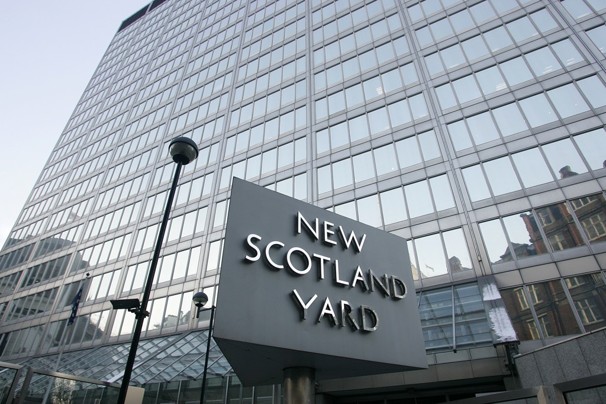
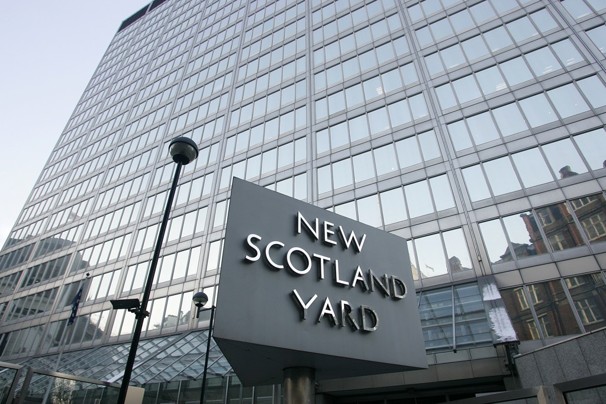
Budget cuts and staffing reductions are causing the police in London England to re-evaluate their accommodation needs.  One of the cost cutting measures being looked at is moving from their current headquarters,  New Scotland Yard, to a smaller facility.

New Scotland Yard has served as the headquarters for London Police Since 1967.  Prior to moving to the new Scotland Yard in 1967, the headquarters was located in the Norman Shaw Building (1890-1967), Great Scotland Yard (1875-1890) and prior to that at 4 Whitehall Place, which had a rear entrance to a street called Great Scotland Yard.

The name Scotland Yard has been synonymous with policing  in London since the formation of the Metropolitan Police by Sir Robert Peel in 1829.

The move to a smaller facility would save the City of London  in the range of 10.5 million dollars annually.

The Search for Tanya Nepinak’s Body: An Exercise in “Relationship Building” Gone Awry

Searching garbage dumps or remote wooded areas is not a new exercise for police when they are looking for the remains of a murder victim.  It has been done before both here in Winnipeg and in other jurisdictions. The reasons for mounting such searches are simple.  In homicide cases it is more likely that a conviction can be obtained if the victim’s remains are located.  The Christine Jack case is proof of that.  Secondly, a failure to locate a homicide victim’s remains is hard on the victim’s family. Without a body there can never be a true sense of closure.

For those reasons police should make every reasonable attempt to locate victim’s remains in homicide cases.

The Tanya Nepinak case serves to illustrate what happens when police allow non-operational considerations to cloud their judgment.  What is at issue in the Tanya Nepinak case is how police went about determining if a search should be conducted, and if so, the area in which where the search should be concentrated.

Normally when police consider conducting a search for a body in a garbage dump such as the Brady Road Landfill site, it is because they have information either from an accused or witnesses that a body was placed in a dumpster and dumped at a specific location.  As a rule if the decision is made to conduct such a search, police have some idea of time frame as well as the location within the landfill where disposal of the body took place.

Without such points of reference a search becomes not only meaningless in terms of the probability of success but also prohibitively expensive.

It would appear that at a certain point during the investigation the police service had such points of reference in terms of time frame and location and announced that a search would be conducted. Then apparently new information came to light which muddied the waters.

It’s then that the Winnipeg Police Service took leave of its senses and abandoned all rational thought and adherence to scientific and investigative principles.  Instead of explaining to the victim’s family and the public what they were faced with and calling off the search, they attempted a face-saving exercise based on their “relationship building” credo.  Not being prepared to deal with the victim’s family and tell them that a search was useless they attempted a compromise:  having an aboriginal elder visit the site, conduct a ceremony, and identify an area to be searched.

The subsequent search of a very small area was not a sound operational decision.  The actual search was a token search, an act of going through the motions in the hope that the victim’s family and aboriginal leaders would be mollified.

How insulting.

In the end police searched a very small area, without success.   Upon the conclusion of the token search the victim’s family was not satisfied citing concerns that the elder who identified the search area did not represent the family and that the area identified by the family had not been searched.

We are now left to wonder if the direction of  future homicide investigations conducted by the Winnipeg Police Service will be based on the dictates  of aboriginal elders,  the musings of soothsayers and  fortune tellers or will police be guided by the results of their investigation.

What do police tell the next victim’s family that asks police to undertake a search of a particular area identified by their chosen elder or religious advisor?

Building relationships with the aboriginal and other minority communities is a laudable goal but not one that should be allowed to supersede operational realities and the facts as they present themselves in a homicide case.

My advice to the police service is this: cut your losses, and come clean.  Admit a flawed decision was made.  Avoid creating a precedent that could haunt the Police Service for years to come.

Defending a flawed decision reflects poorly on the organization and damages its credibility.

Muggings in District 1

Between January 1st.  and October 9th. there have been 520 muggings in District 1.  That is an increase of 4% over last year.

This is what it looks like on a map.

Source:  Winnipeg Police Crimestat website

A close-up view of the immediate downtown area looks like this

Source:  Winnipeg Police Crimestat website

Can you say ‘crime cluster’?